
Can Pilates Help Chronic Back Pain? What San Diego Patients Need to Know About Therapeutic Pilates
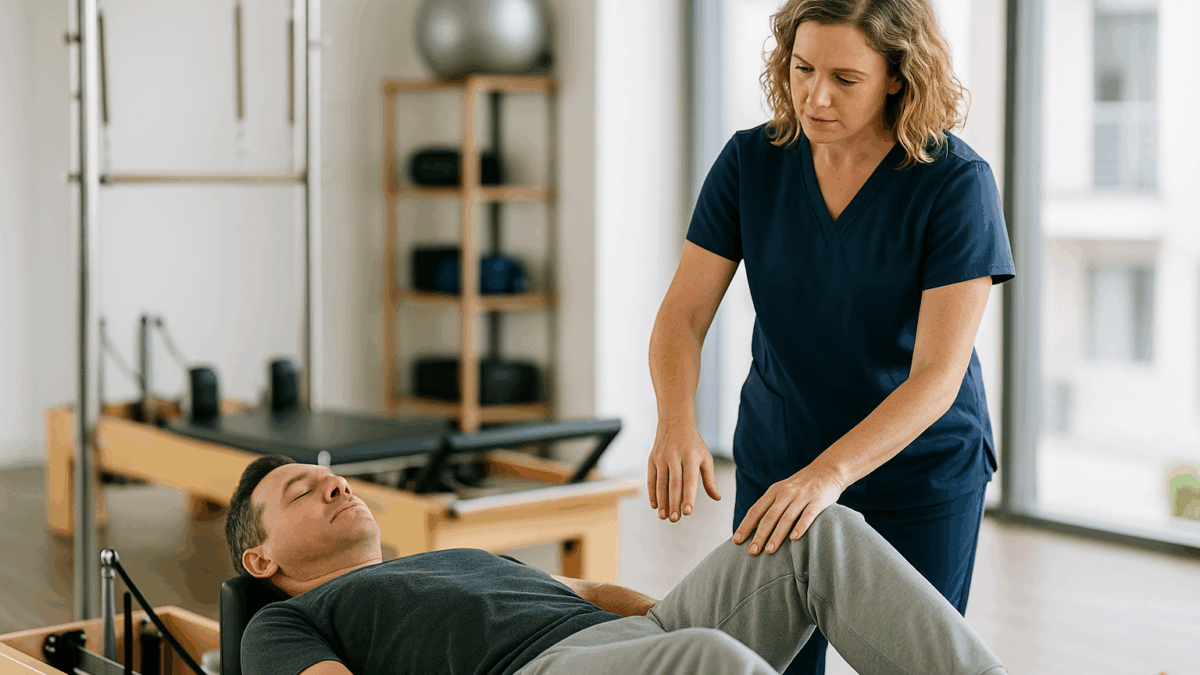
If you’re living with chronic back pain in Vista, Carlsbad, Oceanside, San Marcos, Encinitas, or Escondido, you’ve probably heard conflicting advice about Pilates. Maybe your doctor suggested it, but you’re skeptical—after all, how can exercises originally designed for dancers help someone who can barely get out of bed without pain? Or perhaps you’ve tried a Pilates class at a local studio and found it either too easy to make a difference or too painful to continue.
Here’s what most North County San Diego residents don’t understand: there’s a massive difference between the Pilates classes offered at fitness studios and therapeutic Pilates delivered as clinical rehabilitation. One is designed for healthy, fit individuals looking to tone and strengthen. The other is specifically structured to treat pain, retrain movement dysfunction, and rebuild functional capacity for people whose backs have been limiting their lives.
The Chronic Back Pain Epidemic in San Diego
Chronic low back pain affects approximately 20% of adults, making it one of the most common reasons people seek medical care. For North County San Diego residents—from surfers in Carlsbad to office workers in Vista—back pain doesn’t discriminate. It impacts your ability to enjoy the active lifestyle that drew many of us to Southern California in the first place.
Research shows that Pilates has been shown to be more effective than minimal intervention for pain and function in patients with chronic low back pain. But not all Pilates is created equal, and understanding the difference between therapeutic and fitness-based approaches is crucial for San Diego patients seeking real relief.
Why Traditional Physical Therapy Often Fails for Chronic Back Pain
If you’re dealing with chronic back pain in North County San Diego, you’ve likely already tried the standard medical approach: pain medications, maybe some physical therapy focused on stretching and strengthening, perhaps injections or imaging. While these interventions help some people, many Vista and Carlsbad residents find themselves stuck in a frustrating cycle:
You feel better temporarily, then the pain returns. Or treatments provide minimal relief. Or you’re told there’s “nothing structurally wrong” despite persistent pain that limits your daily activities. This cycle leaves you wondering if you’ll have to accept chronic pain as your new reality.
The Missing Link: Why Back Pain Needs Movement Rehabilitation
Most conventional approaches to chronic back pain focus on isolated problems: tight hamstrings, weak glutes, poor posture, or disc degeneration. While these factors can contribute to pain, they miss the bigger picture of how your entire movement system functions.
Your spine doesn’t operate in isolation. It’s part of an integrated system involving:
- Deep core stabilizers that support your spine from within
- Breathing mechanics that affect spinal stability and pressure management
- Hip and shoulder mobility that influences spinal loading
- Movement patterns that either protect or stress your back throughout daily activities
- Nervous system responses that can maintain pain even after tissue healing
Traditional treatments often address individual pieces without integrating them into a functional whole. This is where therapeutic Pilates excels.
What Makes Therapeutic Pilates Different From Studio Classes
When San Diego patients hear “Pilates,” they often picture group fitness classes with complicated equipment or trendy boutique studios focusing on core workouts. While these offerings have their place, they’re fundamentally different from Pilates used as medical rehabilitation.
Clinical Pilates Is Physical Therapy
At our Vista clinic serving North County San Diego, Pilates rehabilitation is delivered by licensed physical therapists who understand:
Pain Science: How chronic pain develops, what maintains it, and how to systematically reduce sensitization while rebuilding function.
Biomechanics: Which movement patterns load your spine safely versus dangerously, and how to retrain problematic patterns.
Tissue Healing: When to challenge tissues to promote adaptation versus when to modify to prevent aggravation.
Individual Assessment: How to identify your specific dysfunction patterns rather than following generic protocols.
Studio instructors, regardless of their Pilates training quality, cannot provide this level of clinical expertise. They’re teaching fitness to healthy people, not treating medical conditions.
Individualized Programming vs. Group Classes
In a typical Carlsbad or Oceanside fitness studio, everyone in class performs the same exercises with minor modifications. The progression follows a standard curriculum designed for people without pain or movement limitations.
Therapeutic Pilates creates a completely individualized program based on:
- Your specific pain triggers and movement limitations
- Which core muscles are underactive versus overactive
- How your breathing patterns affect spinal stability
- Your functional goals—whether that’s surfing in Carlsbad, hiking in San Marcos, or simply sleeping through the night pain-free
- Your response to each exercise—we progress or modify based on how your body actually responds, not a predetermined timeline
How Pilates Addresses the Root Causes of Chronic Back Pain
Effective treatment for chronic back pain requires addressing multiple interconnected factors. Therapeutic Pilates provides the framework to systematically work on each component while integrating them into functional movement.
Retraining Core Muscles for Back Pain Relief
Your spine has deep stabilizing muscles—the transversus abdominis, multifidus, pelvic floor, and diaphragm—that should activate automatically to protect your back during movement. Research consistently shows that people with chronic low back pain have altered activation patterns in these deep stabilizers.
The problem isn’t that these muscles are weak—it’s that they’re not activating at the right time or in the right sequence. Your body develops compensation patterns where superficial muscles take over, creating excessive tension and inefficient movement.
Pilates rehabilitation systematically retrains these deep stabilizers through:
Controlled, Low-Load Exercises: We start with exercises that activate deep core muscles without triggering your pain or compensation patterns. For many San Diego patients, this might mean beginning with breathing exercises and gentle pelvic movements—not the advanced Pilates repertoire you see on Instagram.
Progressive Challenge: As your deep stabilizers begin firing correctly, we gradually increase the challenge while maintaining proper activation patterns. This ensures you’re building functional stability, not just strengthening muscles in isolation.
Real-Time Feedback: Your therapist provides hands-on cueing and visual feedback so you can feel the difference between correct deep core activation and superficial compensation.
Improving Breathing Mechanics for Spinal Stability
Most people with chronic back pain in North County San Diego have dysfunctional breathing patterns—often shallow chest breathing or breath-holding during activities. This matters because your diaphragm is a key spinal stabilizer.
When you breathe correctly:
- Your diaphragm moves down on inhalation, creating appropriate intra-abdominal pressure
- This pressure supports your spine from within, like an internal weight belt
- Your pelvic floor coordinates with your diaphragm, maintaining the pressure system
- Your deep core muscles activate automatically to manage this pressure
When breathing is dysfunctional, your spine loses this internal support system, forcing superficial muscles to compensate and creating the tension patterns that perpetuate pain.
Pilates places enormous emphasis on breath coordination, making it uniquely suited to address this often-overlooked component of back pain.
Building Back Pain Recovery Through Progressive Pilates
One of the biggest mistakes in back pain rehabilitation is progressing too quickly. Many Vista and Carlsbad residents have experienced this: you do some physical therapy exercises, feel a bit better, try to return to normal activities, and immediately re-aggravate your back.
Therapeutic Pilates builds capacity systematically:
Start Where You Are: If lying flat hurts, we modify. If certain movements trigger pain, we work around them initially while addressing why they’re problematic.
Progress Based on Response: We advance exercises only when your body demonstrates it can handle the previous level without pain or compensation.
Bridge to Function: Rather than just doing exercises, we train movement patterns you actually need—getting in and out of your car, lifting objects, transitioning from sitting to standing—so improvements translate to real life.
Combining Pilates Rehabilitation with Manual Therapy in San Diego
At our Vista clinic, we often see the most dramatic results when Pilates rehabilitation is combined with Counterstrain therapy. Here’s why this combination is so effective:
Counterstrain addresses the tissue-level dysfunction—fascial restrictions, protective muscle spasms, and trapped inflammation—that prevents your body from moving correctly. Think of it as removing the locks that are preventing doors from opening.
Pilates then retrains the movement system to work optimally now that those restrictions are released. It teaches your body how to use those newly unlocked doors effectively.
Many Vista, Carlsbad, and Oceanside patients find that exercises which were previously painful or impossible become accessible after Counterstrain treatments. The manual therapy creates the conditions for successful exercise rehabilitation.
What to Expect From Therapeutic Pilates for Back Pain
If you’re considering Pilates rehabilitation at our San Diego locations, here’s what the process typically looks like:
Initial Evaluation
Your first session involves comprehensive assessment of:
- Your pain history, what triggers it, and what helps
- Movement quality and patterns during basic activities
- Core activation and breathing mechanics
- Flexibility, strength, and coordination
- Your functional goals and activity limitations
This assessment allows your therapist to identify your specific dysfunction patterns and create an individualized treatment plan.
Progressive Treatment Sessions
Sessions typically last 45-60 minutes and occur weekly or twice weekly depending on your needs. Each session builds on the previous one, with your therapist:
- Guiding you through exercises appropriate for your current level
- Providing hands-on cueing to ensure correct activation patterns
- Modifying exercises based on your daily pain levels and response
- Progressing your program as your capacity improves
- Educating you about your body mechanics and pain triggers
Timeline for Improvement
Most San Diego patients begin noticing improvements within 6-8 sessions, though this varies based on chronicity and complexity. You might notice:
- Reduced pain intensity or frequency
- Better tolerance for activities that previously triggered pain
- Improved posture and movement quality
- Less reliance on pain medications
- Return to activities you’d stopped doing
Complete rehabilitation typically takes 3-6 months for chronic conditions, with sessions gradually spaced further apart as you gain independence.
Who Benefits Most From Pilates for Back Pain
Therapeutic Pilates is particularly effective for San Diego residents dealing with:
Non-Specific Chronic Low Back Pain: When imaging shows minimal findings but pain persists, Pilates addresses the movement dysfunction and motor control problems maintaining your symptoms.
Post-Surgical Rehabilitation: After spinal surgery, Pilates provides the gradual, controlled progression needed to rebuild function safely.
Degenerative Disc Disease: While Pilates can’t reverse disc degeneration, it strengthens the muscular support system to reduce load on degenerative segments.
Recurrent Back Pain Episodes: If your back “goes out” periodically, Pilates builds the stability and motor control to prevent future episodes.
Failed Traditional Physical Therapy: Many Vista and Encinitas patients come to Pilates after conventional PT didn’t provide lasting relief. The emphasis on motor control and breathing often addresses the missing pieces.
What Makes Our Approach Different in San Diego
At our Vista clinic, we understand that every North County patient’s back pain story is unique. Our approach combines clinical Pilates expertise with comprehensive manual therapy options, allowing us to address both tissue dysfunction and movement patterns.
We serve active North County residents who want to return to surfing, hiking, biking, and enjoying the outdoor lifestyle that makes this region special. We also work with people whose goals are simpler but equally important—sleeping through the night, playing with grandchildren, or getting through a workday without constant pain.
Whether you’re in Vista, Carlsbad, Oceanside, San Marcos, Encinitas, or Escondido, specialized Pilates rehabilitation can provide the systematic, individualized approach your back pain needs.
Start Your Pilates Rehabilitation for Back Pain in Vista
If you’re tired of managing chronic back pain with temporary fixes—pain medications that don’t address the problem, stretches that provide momentary relief, or exercises that seem to help until they don’t—therapeutic Pilates offers a different path forward.
The question isn’t whether Pilates can help chronic back pain. Research clearly demonstrates that it can. The question is whether you’re receiving true therapeutic Pilates from qualified clinicians who understand pain science, movement dysfunction, and progressive rehabilitation—or whether you’re doing fitness Pilates with an instructor who lacks the clinical expertise to treat your condition.
Your back pain doesn’t have to dictate your life in North County San Diego. The beaches, trails, and active lifestyle that make this region special should be accessible to you without constant pain or fear of aggravation.
Ready to discover what therapeutic Pilates can do for your chronic back pain? Contact our Vista practice today to schedule your comprehensive evaluation and start building the strong, pain-free back you deserve. Because life’s too short to let back pain hold you back from the activities and experiences that matter most.