
Counterstrain for Digestive Issues: Treating IBS and Abdominal Pain in Coronado
If you’re living with irritable bowel syndrome (IBS), chronic abdominal pain, bloating, or other digestive issues in Coronado, Downtown San Diego, Point Loma, or Imperial Beach, you’ve probably exhausted the conventional medical options. You’ve tried elimination diets, probiotics, medications, and maybe even seen multiple gastroenterologists. Your testing comes back normal, yet you’re still suffering with symptoms that significantly impact your daily life.
What most San Diego residents don’t know is that many persistent digestive problems have a mechanical component that standard medical care simply doesn’t address. Fascial restrictions, visceral dysfunction, and tissue inflammation in your abdomen can create or maintain digestive symptoms—even when there’s nothing structurally wrong with your gut. This is where Counterstrain therapy offers hope for patients who’ve been told “there’s nothing more we can do” or “you’ll just have to learn to live with it.”
The Hidden Connection Between Tissue Dysfunction and Digestive Problems
Your digestive organs don’t float freely in your abdomen. They’re suspended, supported, and connected by layers of fascia—connective tissue that forms a continuous web throughout your entire body. When this fascial system becomes restricted due to surgery, injury, stress, infection, or inflammation, it affects how your organs move, slide, and function.
Research demonstrates that visceral manipulation can significantly improve symptoms in patients with functional gastrointestinal disorders. The fascia surrounding your stomach, intestines, liver, and other abdominal organs can develop protective spasms and restrictions that:
- Limit normal organ motility and movement
- Create mechanical irritation that triggers pain signals
- Interfere with blood flow and lymphatic drainage
- Affect nerve signaling between your gut and brain
- Maintain chronic inflammation that perpetuates symptoms
When these mechanical restrictions exist, even the healthiest diet or most targeted medication may provide only limited relief because the underlying tissue dysfunction remains unaddressed.
Why Traditional IBS and Digestive Treatment Often Fails
If you’re dealing with chronic digestive problems in the San Diego area, the typical medical journey looks something like this: multiple doctor visits, extensive testing (endoscopies, imaging, bloodwork), dietary restrictions, and various medications. For many Coronado and Point Loma residents, this process becomes frustrating when tests reveal no clear pathology.
The IBS and Functional Diagnosis Dilemma
Conditions like IBS, functional dyspepsia, and non-specific abdominal pain fall into a category called “functional” disorders—meaning there’s no visible structural damage or disease process, yet symptoms are very real and often debilitating. The medical system struggles with these conditions because standard treatments target what they can see on tests, not the mechanical dysfunction that doesn’t show up on imaging.
Studies indicate that up to 40% of the population experiences functional gastrointestinal disorders, yet treatment options remain limited to symptom management rather than addressing root causes.
What Standard Digestive Care Misses
Traditional gastroenterology focuses on:
Chemical solutions: Medications to alter gut motility, reduce acid, or manage symptoms
Dietary interventions: Elimination diets, low-FODMAP protocols, or identifying trigger foods
Mental health approaches: Stress management and treating anxiety related to gut symptoms
While these approaches help some people, they don’t address the fascial restrictions, organ adhesions, and tissue dysfunction that often maintain digestive symptoms. For many San Diego patients, this missing piece explains why conventional treatments provide incomplete relief.
How Counterstrain Addresses Digestive Dysfunction
Counterstrain is an osteopathic manual medicine technique that releases protective tissue spasms and drains trapped inflammation from the interstitium—the small spaces between cells where fluid and inflammatory substances can accumulate. When applied to the abdomen and digestive system, this gentle technique addresses the mechanical dysfunction that contributes to or maintains digestive symptoms.
Releasing Abdominal Fascial Restrictions for Digestive Relief
At our Coronado clinic, Counterstrain practitioners use specific diagnostic tender points to identify which abdominal structures are in dysfunction. These tender points correlate directly to specific organs, blood vessels, nerves, and fascial layers in your digestive system.
Treatment involves positioning your body to shorten the dysfunctional tissue, allowing protective spasms to release and trapped inflammation to drain. This process:
- Restores normal mobility to digestive organs
- Reduces mechanical irritation of visceral nerves
- Improves blood flow and lymphatic drainage to abdominal organs
- Releases fascial restrictions that limit organ function
- Addresses scar tissue and adhesions from previous surgeries
The Gut-Brain Connection in IBS and Digestive Dysfunction
Your digestive system and nervous system are intimately connected through the gut-brain axis. When visceral tissues are in protective spasm and chronically inflamed, they send continuous distress signals to your brain, maintaining heightened sensitivity and dysfunction.
Counterstrain interrupts this cycle by:
Deactivating visceral pain receptors: Trapped inflammation chemically irritates pain-sensing nerves in your abdomen. When Counterstrain drains this inflammation, those nerves calm down.
Resetting autonomic nervous system function: Your vagus nerve, which controls digestive function, can become dysregulated when surrounded by dysfunctional tissue. Releasing these restrictions helps restore normal autonomic function.
Breaking protective guarding patterns: Just as you might guard a sore shoulder, your body creates protective spasms around irritated abdominal organs. These protective patterns often outlast the original problem, maintaining symptoms long after initial injury or illness.
IBS, Abdominal Pain & Conditions That Respond to Counterstrain
Counterstrain therapy in Coronado and throughout San Diego has proven particularly effective for various digestive and abdominal conditions:
Irritable Bowel Syndrome (IBS)
Many patients with IBS have significant fascial restrictions and organ mobility limitations that contribute to their symptoms. When these mechanical factors are addressed through Counterstrain, patients often experience reduced pain, improved bowel regularity, and decreased bloating. The gentle, non-invasive nature of treatment makes it ideal for the hypersensitive abdominal tissues common in IBS patients.
Chronic Abdominal Pain
When extensive medical workup reveals no clear cause for abdominal pain, visceral dysfunction is often the culprit. Counterstrain’s diagnostic tender point system can pinpoint exactly which structures are in spasm—whether that’s your stomach, liver, intestines, or the fascial layers connecting them—and treat those specific dysfunctions.
Post-Surgical Adhesions and Complications
Surgery creates scar tissue and adhesions that can limit organ mobility and create ongoing discomfort. Many Coronado residents continue experiencing digestive symptoms months or years after abdominal surgery. Counterstrain addresses these post-surgical restrictions without requiring aggressive manual techniques that could cause further irritation.
Bloating and Digestive Discomfort
Persistent bloating often involves impaired organ motility and lymphatic congestion. By improving fascial mobility and supporting better drainage of the abdominal lymphatic system, Counterstrain helps reduce the mechanical factors contributing to bloating and fullness.
GERD and Upper Digestive Issues
Acid reflux and upper digestive symptoms can have mechanical components involving the diaphragm, esophagus, and stomach. Counterstrain releases restrictions in these structures that may be contributing to or maintaining symptoms despite medication.
What to Expect from Counterstrain Treatment for Digestive Issues
Many San Diego patients come to Counterstrain therapy skeptical that gentle positioning and manual work could affect their digestive symptoms. Understanding what happens during treatment can help set realistic expectations.
Initial Digestive Assessment
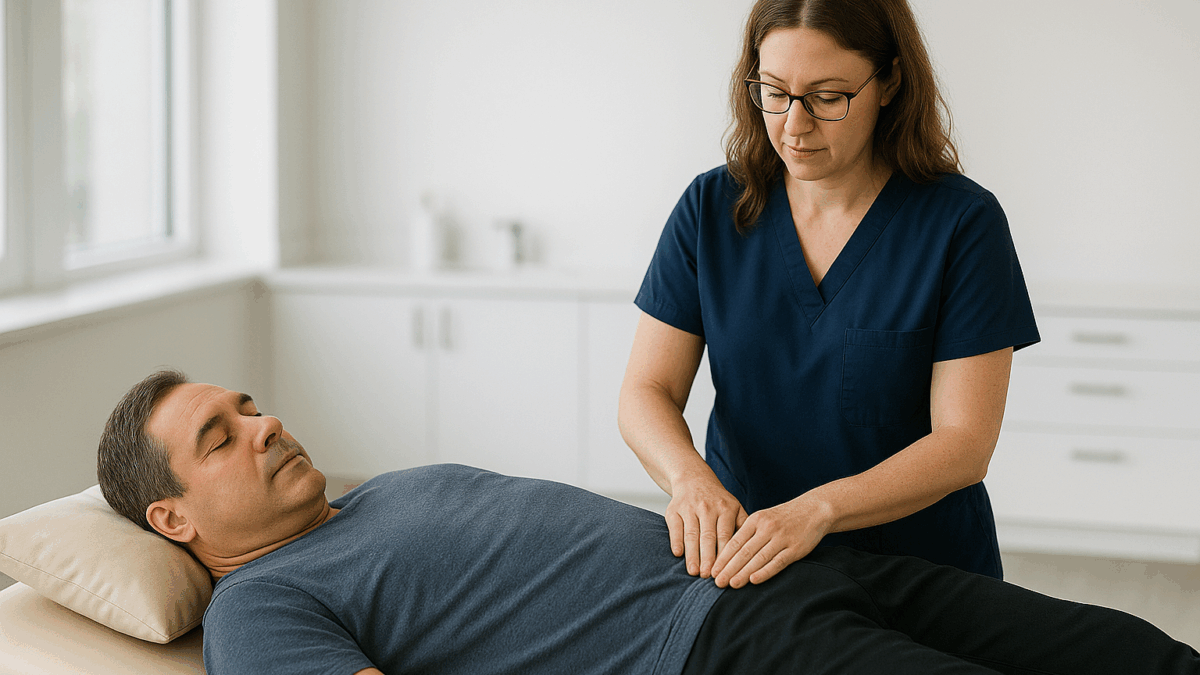
Your first session involves comprehensive assessment of your digestive history, symptom patterns, and previous treatments. Your practitioner will palpate your abdomen to identify tender points that indicate which organs and tissues are in dysfunction. This diagnostic process is precise—each tender point correlates to a specific anatomical structure.
The evaluation is completely comfortable and non-invasive. Unlike deep abdominal massage or aggressive manipulation, Counterstrain uses gentle palpation to assess tissue quality and locate areas of restriction.
Counterstrain Treatment Sessions for Digestive Issues
During treatment, you’ll be positioned comfortably while your practitioner guides your body into positions that shorten the dysfunctional tissues. These positions are held for 90 seconds, allowing protective spasms to release and inflammation to drain from the interstitium.
Treatment is entirely pain-free. In fact, the positions used are specifically chosen because they’re comfortable—your body recognizes them as non-threatening, which allows the protective guarding to release.
Treatment Timeline for IBS and Digestive Relief
Many Coronado patients notice improvements after their first session—perhaps reduced pain, less bloating, or improved bowel function. However, chronic digestive issues typically require multiple sessions to achieve lasting change.
Treatment frequency typically starts weekly, with sessions spaced further apart as symptoms improve. Acute issues may resolve in 2-4 sessions, while chronic conditions that have persisted for years may require 8-12 treatments for optimal results.
Combining Counterstrain with Other IBS and Digestive Treatments
Counterstrain doesn’t replace good nutrition, appropriate medical care, or stress management—it complements these approaches by addressing the mechanical component that other treatments miss.
Many Point Loma and Downtown San Diego patients find that once mechanical restrictions are released through Counterstrain, other interventions become more effective:
- Dietary changes that previously provided minimal benefit now make a noticeable difference
- Medications work better when tissue function improves
- Stress management techniques have greater impact when the nervous system isn’t constantly receiving distress signals from dysfunctional tissues
- Exercise and activity become more comfortable as abdominal restrictions release
Why Choose Counterstrain for Digestive Issues in Coronado
If you’ve spent months or years trying to resolve digestive symptoms without lasting success, Counterstrain offers a fundamentally different approach. Rather than managing symptoms or avoiding triggers, this technique addresses the underlying tissue dysfunction that may be maintaining your digestive problems.
At our Coronado location, we understand the frustration of being told “everything looks normal” when you know something is wrong. We also serve patients throughout San Diego County, including our Vista clinic for North County residents.
The gentle, non-invasive nature of Counterstrain makes it appropriate even for highly sensitive digestive systems. There’s no deep massage, forceful manipulation, or aggressive treatment that could trigger symptom flare-ups.
When San Diego Patients Should Consider Counterstrain for Digestive Issues
Counterstrain may be particularly beneficial if you experience:
- Chronic abdominal pain without clear medical cause
- IBS symptoms that haven’t responded adequately to dietary changes or medication
- Persistent digestive discomfort following abdominal surgery
- Bloating and distension that doesn’t improve with standard approaches
- Multiple functional digestive diagnoses with limited treatment success
- Digestive symptoms that worsen with stress or specific movements
- A sense that mechanical factors might be involved in your symptoms
Start Treating IBS and Digestive Issues in Coronado
Living with chronic digestive problems affects far more than your gut—it impacts your energy, mood, social activities, and overall quality of life. For San Diego residents who’ve been told there’s nothing more that can be done, or who’ve been managing symptoms for years without real resolution, Counterstrain offers a path forward.
Your digestive issues don’t have to be permanent. The beaches, restaurants, and active lifestyle that make Coronado and San Diego special should be accessible to you without constant worry about your gut. When mechanical tissue dysfunction is addressed through Counterstrain, many patients finally experience the relief that other approaches couldn’t provide.
If you’re ready to explore whether Counterstrain can help your digestive symptoms, contact our Coronado practice today to schedule your comprehensive evaluation. Because you deserve answers—and relief—not just more symptom management.